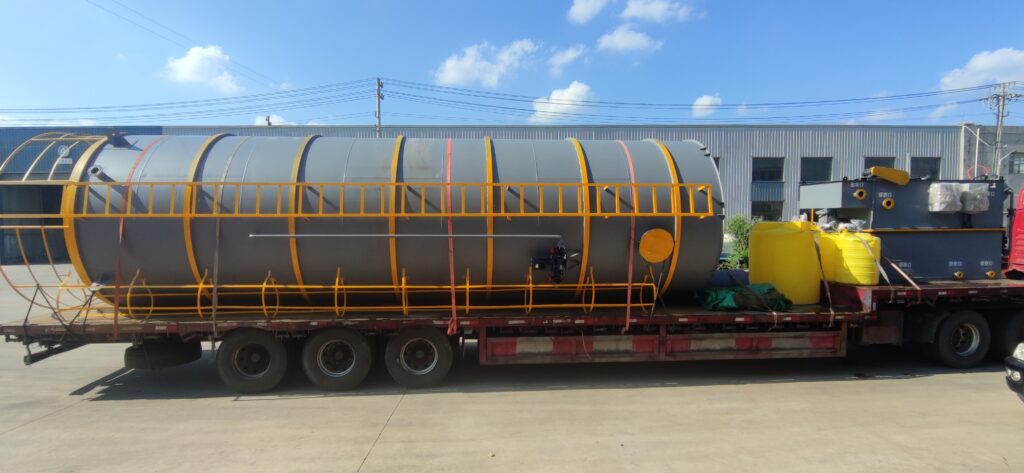
UASB/IC Anaerobic System

High-efficiency anaerobic wastewater treatment for high COD industrial effluent
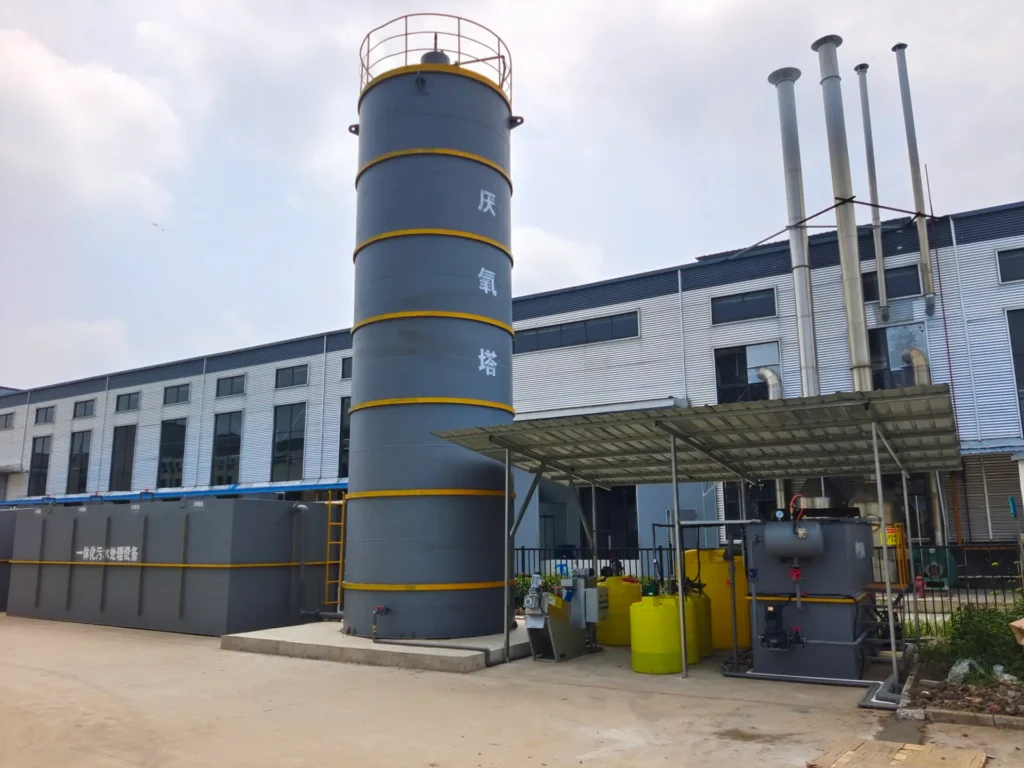
Anaerobic biological treatment is a cornerstone technology in environmental and energy engineering, and one of the most powerful methods for organic wastewater treatment. Historically, it was primarily applied to sludge, organic waste, and certain high-concentration organic wastewaters at municipal treatment plants, typically using conventional digesters. However, limitations such as long hydraulic retention times and low organic loading rates restricted its broader application in wastewater treatment for many years.

Since the 1970s, as global energy scarcity has intensified, anaerobic wastewater technologies capable of energy recovery have gained significant attention. Through continuous research and engineering advances, a variety of innovative processes and equipment have been developed. These innovations have dramatically increased the retention of active biomass within anaerobic reactors, resulting in substantially shorter treatment times and markedly improved efficiency.

36videowastewatertreatmentequipmenthero

Typical Applications

  • Food Processing Wastewater
  • Brewery Wastewater
  • Distillery Wastewater
  • Starch Processing Wastewater
  • Paper Mill Wastewater
  • Chemical Wastewater
  • Pharmaceutical Wastewater
  • Organic Industrial Wastewater

Technical Specifications

ItemSpecification
Treatment CapacityCustomized
Process TypeUASB / IC Anaerobic Treatment
COD Removal EfficiencyUp to 80–95%
Organic Loading RateCustomized
Biogas RecoveryAvailable
Material OptionsCarbon Steel / SS304 / SS316
Control ModeManual / PLC Automatic
Installation TypeCivil Construction / Steel Structure

Main Components

Reactor Tank

Provides the anaerobic treatment environment.

Anaerobic Sludge Bed

Contains high-density anaerobic granular sludge.

Gas-Liquid-Solid Separator

Separates biogas, treated water, and sludge.

Biogas Collection System

Collects and transfers generated biogas.

Internal Circulation System (IC Only)

Enhances mixing and treatment efficiency.

Control System

Optional PLC-based automatic monitoring and operation.

Working Principle
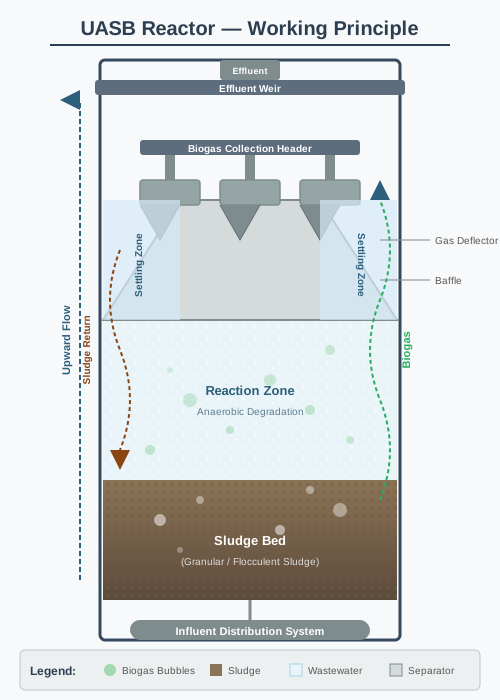
Wastewater is introduced as evenly as possible to the bottom of the UASB reactor and flows upward through a sludge bed composed of granular or flocculent sludge.

Anaerobic reactions occur during contact between the wastewater and sludge particles. The biogas produced under anaerobic conditions—primarily methane and carbon dioxide—creates internal circulation, which promotes the formation and maintenance of granular sludge. Some gas bubbles generated in the sludge layer attach to sludge particles, while both attached and free gas bubbles rise toward the top of the reactor. When sludge reaching the surface strikes the bottom of the three-phase separator’s gas deflector, attached bubbles are released from the sludge flocs. After degassing, sludge particles settle back onto the sludge bed surface, while both attached and free gases are collected in the gas collection chamber at the top of the three-phase separator. The baffle located beneath the gas collection chamber serves as a gas deflector and prevents biogas bubbles from entering the settling zone, which would otherwise cause turbulence and hinder particle settling. Liquid containing residual solids and sludge particles passes through the gaps in the separator into the settling zone.


Due to the inclined walls of the separator, the cross-sectional area of the settling zone increases as it approaches the water surface, causing the upflow velocity to decrease near the discharge point. This reduced velocity allows sludge flocs to coagulate and settle in the settling zone. Sludge flocs accumulating on the three-phase separator will eventually exceed the friction force holding them on the inclined surface, causing them to slide back into the reaction zone, where they will once again react with incoming organic matter.

Working Principle

Key Benefits

High COD Removal Efficiency

Efficiently removes organic pollutants from high-strength industrial wastewater.

Low Operating Cost

Minimal energy consumption and low sludge production contribute to reduced operating expenses.

Renewable Energy Recovery

Organic matter is converted into valuable biogas that can be utilized as an energy source.

Compact Footprint

Especially for IC reactors, high loading capacity reduces land requirements.

Stable Long-Term Operation

Suitable for continuous industrial wastewater treatment applications.

Flexible Process Design

Customized solutions available according to wastewater characteristics and treatment objectives.

Equipment Structure

The UASB reactor consists of the following components: influent and distribution system, reactor tank body, and three-phase separator.

The most critical component of the UASB reactor is the three-phase separator, which is installed at the top of the reactor and divides it into a lower reaction zone and an upper settling zone. To achieve satisfactory settling of sludge flocs/particles in the upflow within the settling zone, the primary purpose of the three-phase separator is to effectively separate biogas generated from the sludge bed/layer—particularly under high loading conditions. The reflection plate beneath the gas collection chamber prevents biogas from escaping through gaps between collection chambers into the settling zone. Additionally, the baffle helps reduce liquid turbulence caused by high biogas production in the reaction zone. The reactor should be designed so that as long as the sludge layer does not expand into the settler, sludge particles or flocculent sludge can slide back into the reaction zone.

It should be recognized that occasional expansion of the sludge layer into the settler is not necessarily detrimental. On the contrary, an expanded sludge layer within the settler can capture dispersed sludge particles/flocs and provide some removal of biodegradable soluble COD. However, it is important to maintain sufficient free space for sludge layer expansion to prevent loss of dense sludge during temporary organic or hydraulic loading shocks. Both hydraulic and organic (biogas production) loading rates affect the expansion of the sludge layer and sludge bed. The fundamental principle of the UASB system is based on the formation of well-settling sludge flocs, combined with an internal sludge settling system that achieves separation of gas, liquid, and solid phases. The formation and maintenance of well-settling sludge—whether flocculent or granular—is the cornerstone of successful UASB operation.

UASB vs IC Reactor

ItemUASBIC
Investment CostLowerHigher
Organic Loading RateMediumHigh
FootprintLargerSmaller
Energy RecoveryGoodExcellent
Suitable ScaleSmall to MediumMedium to Large

Why Choose Our UASB / IC System

  • Customized anaerobic process design
  • High-efficiency COD removal
  • Stable biogas production
  • Low operating costs
  • Engineering and commissioning support
  • Reliable manufacturing quality
  • Extensive wastewater treatment experience

Request a Solution

Please provide:

  • Wastewater flow rate
  • COD concentration
  • BOD concentration
  • Wastewater source
  • Discharge requirements

Our engineering team will recommend the most suitable UASB or IC solution for your project.