
Membrane Bioreactor Technology

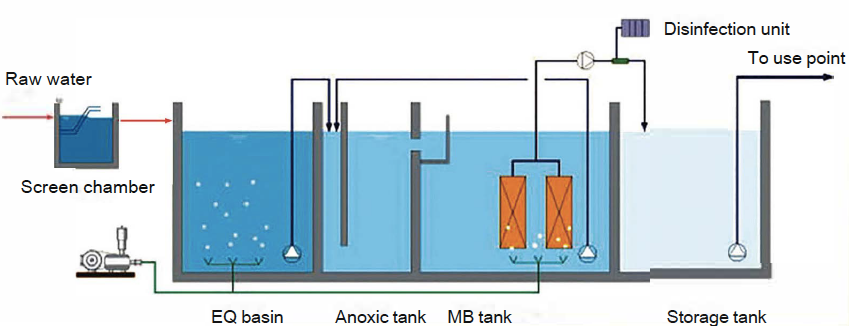
This Membrane Bioreactor (MBR) system combines advanced membrane separation with biological treatment to effectively handle wastewater. The system features an A-zone for anoxic/anaerobic processes, which allows for optimal interaction between wastewater and activated sludge. The O-zone, filled with membrane modules, utilizes PVDF membranes to retain sludge and organic materials, removing the necessity for secondary sedimentation.

The innovative design increases activated sludge concentration and allows control over Hydraulic Retention Time (HRT) and Sludge Retention Time (SRT). This flexibility is essential for breaking down tough pollutants over longer periods.

Ultimately, treated effluent meets discharge standards and can be reused. Additionally, the strategic aeration within the MBR enhances internal flow, boosts biodegradation, and reduces membrane fouling.

ADVANCED TREATMENT

Advanced Purification Systems

Advanced polishing technologies for high-standard discharge and water reuse.


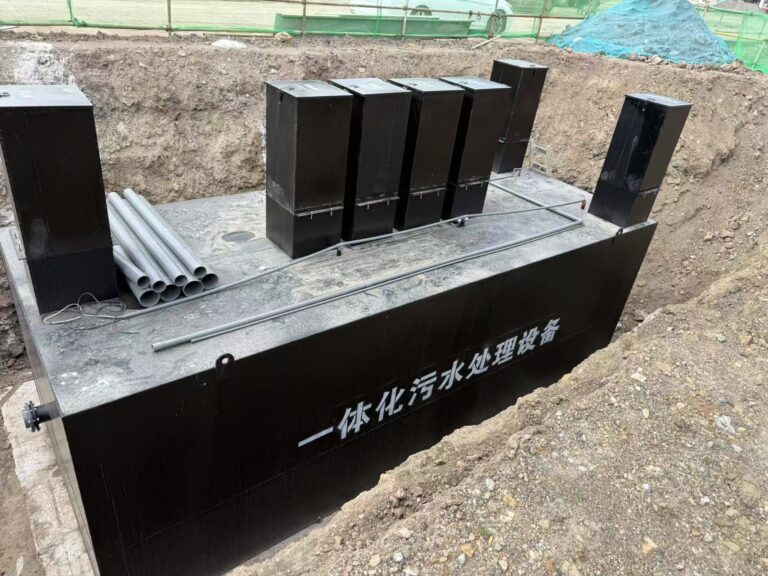
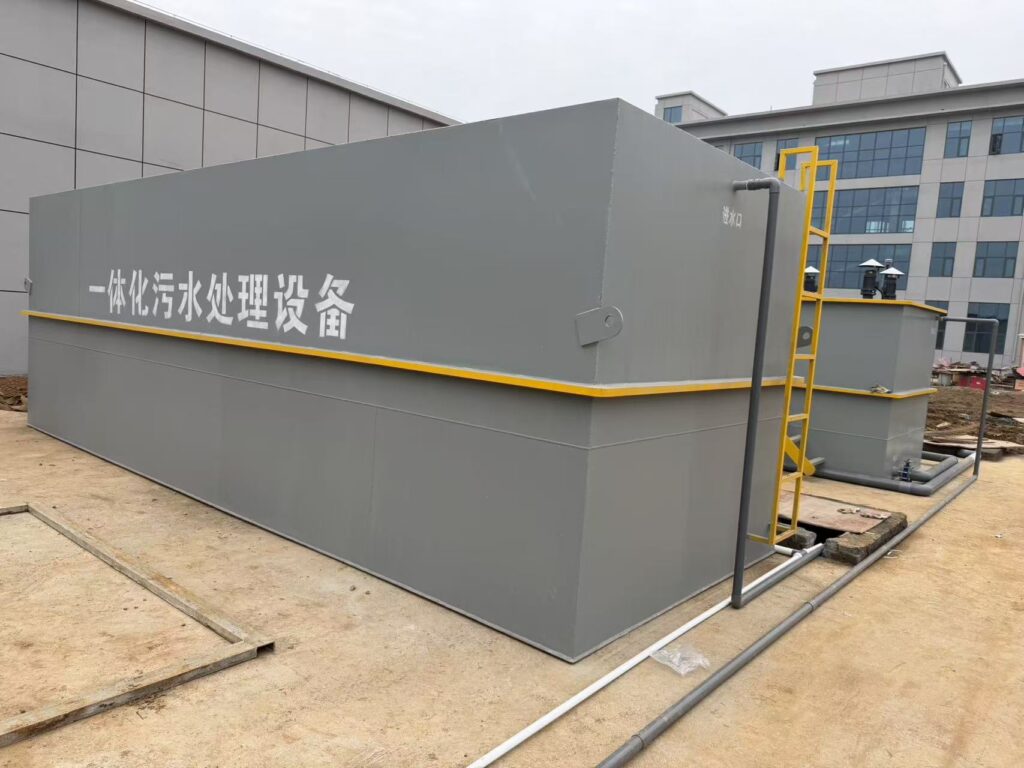
  1. Compact design with a small footprint, requiring minimal installation space. Underground installation and modular mobility options are available, making landscaping easier while preventing odor and mosquito issues.


  2. High removal efficiency for organic pollutants, delivering stable and reliable effluent quality.


  3. Simple operation and convenient installation, with low maintenance requirements and excellent self-protection performance.


  4. Excellent treatment performance, ensuring the effluent meets discharge standards.


  5. The integrated system can be flexibly configured according to influent water quality, providing wide application adaptability.

Working Process

ADVANCED TREATMENT

Membrane Bioreactor

MBR Membrane Bioreactor Working Principle

A Membrane Bioreactor (MBR) is an advanced and highly efficient wastewater treatment technology that combines membrane separation technology with the conventional activated sludge process.

In an MBR system, membrane modules replace the traditional secondary sedimentation tank, allowing a large concentration of microorganisms and activated sludge to be retained within the biological treatment system. This significantly increases microbial activity and biodiversity, greatly enhancing the system’s treatment efficiency and pollutant removal capacity.

As a result, both the effluent quality and volumetric loading performance are substantially improved. The treated water can achieve high discharge standards and is suitable for water reclamation and reuse applications.

ADVANCED TREATMENT

MBR Membrane Process Introduction

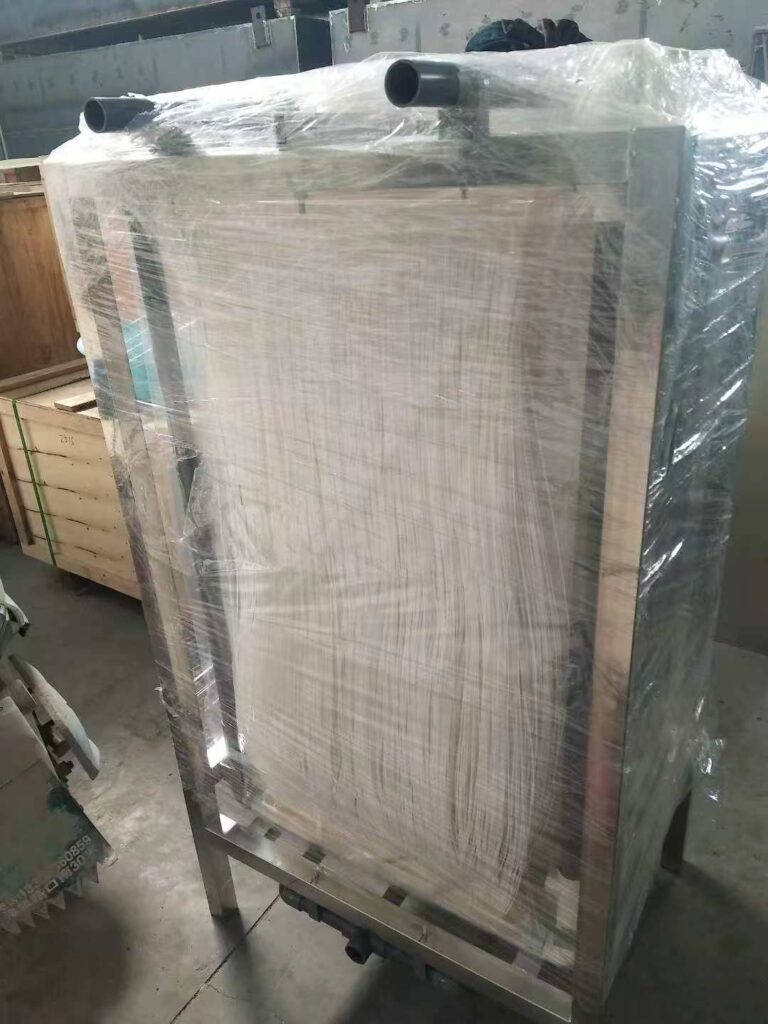
The PVDF membrane module consists of two main sections: the membrane element chamber (upper section) and the aeration chamber (lower section). Inside the membrane chamber, membrane elements are connected to the permeate collection pipe through flexible hoses, while the aeration chamber is equipped with aeration pipes to provide continuous air scouring.

Each membrane element can be individually inserted or removed, allowing convenient maintenance and easy replacement.

The core component of the MBR system is the high-performance submerged membrane module. By adopting a negative-pressure suction filtration method, the system significantly reduces operating energy consumption — typically 10 to 20 times lower than conventional pressurized external membrane filtration systems.

The flat-sheet membrane design features a simple and reliable structure. During operation, continuous mixing and scouring generated by aeration airflow and wastewater help minimize membrane fouling and sludge accumulation on the membrane surface, ensuring stable long-term performance and efficient system operation.

ModelCH-PVDF-6CH-PVDF-10CH-PVDF-15
Daily Treatment Capacity2.8–3.5 m³/day4.8–5.5 m³/day7.2–7.5 m³/day
Membrane MaterialReinforced PVDFReinforced PVDFReinforced PVDF
Membrane Pore Size0.1 μm0.1 μm0.1 μm
Module Height1000 mm1500 mm2000 mm
Weight6 kg10 kg15 kg
Frame MaterialStainless SteelStainless SteelStainless Steel
Aeration Pipe MaterialUPVCUPVCUPVC
Permeate Pipe MaterialUPVCUPVCUPVC

Key Benefits

Excellent Effluent Quality

Effluent turbidity consistently <0.2 NTU. Meets reuse-grade standards without tertiary treatment.

Compact Footprint

30–50% smaller footprint than equivalent conventional activated sludge. Underground installation available.

High Biomass Concentration

MLSS 8,000–12,000 mg/L — 3–4× conventional AS. Longer SRT enables stable nitrification at lower temperatures.

Reliable Removal Efficiency

COD removal >95%, BOD <10 mg/L, TSS <5 mg/L under design conditions. Results documented across municipal and industrial installations.

Water Reuse Capability

Effluent meets GB/T 18921 urban reclaimed water standard and WHO reuse guidelines.

Stable Operation

90-day unattended operation cycle on integrated units. Remote alarm via SMS. Membrane cleaning interval: 6–12 months depending on influent loading.

Typical Applications
  • Municipal Wastewater Treatment

  • Industrial Wastewater Treatment

  • Food Processing Wastewater

  • Pharmaceutical Wastewater

  • Textile Wastewater

  • Chemical Wastewater

  • Hotel and Resort Wastewater

  • Water Reuse Projects

What Ships With Every MBR Unit

Every MBR system leaves our facility with: wet-run test records documenting flux rate and effluent turbidity; a commissioning manual written for the site technician; membrane warranty documentation with flux-decay baseline data; and a defined spare parts list with lead times for your region. Third-party inspection at our facility is available on request before crating.
Request a Solution

Please provide:
  • Wastewater flow rate

  • COD and BOD values

  • Discharge requirements

  • Installation space

  • Water reuse requirements

Our engineering team will recommend the most suitable MBR solution for your project.

Scroll to Top